Frequently Asked Questions
General HDPE Pipe
-
High-Density Polyethylene—a durable, flexible, and chemically resistant thermoplastic used in piping systems.
-
Water & Wastewater Systems:
Potable water supply for urban, rural, and remote communities,
Stormwater drainage and sewer networks, Irrigation systems in agriculture and Trenchless installations for upgrades and replacements
Gas & Chemical Distribution
Low-pressure gas pipelines for residential and commercial use, Industrial chemical transport, including corrosive and abrasive fluids
Mining & Industrial Infrastructure
Slurry and tailings pipelines in mining operations, Process piping in manufacturing and treatment plants
Road & Rail Crossings
Culverts and under-road drainage systems, Cable protection conduits for power and telecom
Environmental & Sustainable Projects
Landfill leachate collection systems, Wetland and flood zone drainage, Renewable energy loops, such as geothermal systems
Infrastructure & Construction
Cable Protection and Conduits
-
In Australia HDPE pipes range from DN16 to DN2000, with pressure ratings from PN4 to PN25 depending on wall thickness and SDR.
-
Typically 50–100 years, depending on installation quality, operating conditions, and material grade.
-
Yes—HDPE is non-toxic and approved for potable water systems globally.
-
Absolutely. HDPE is ideal for buried applications due to its flexibility, corrosion resistance, and long lifespan.
-
Standard Dimension Ratio—SDR defines the pipe wall thickness relative to its diameter. Lower SDR = thicker wall = higher pressure rating.
HDPE Fittings
-
Stub flanges, elbows, reducers, tees, end caps, electrofusion couplers, and custom-fabricated components.
-
Yes—GEM Industrial and partners offer bespoke fabrication for complex systems.
-
Yes—fittings are designed to match pipe pressure ratings and are tested for integrity.
-
Via butt fusion, electrofusion, or mechanical couplings depending on the application.
Fusion Welding
-
Butt fusion is a process where HDPE pipe ends are heated and pressed together to form a seamless, monolithic joint. The weld is as strong—or stronger—than the pipe itself.
-
A method using fittings with embedded heating coils to weld HDPE components together.
-
It depends on the application. Butt fusion is ideal for straight runs; electrofusion suits confined spaces or repairs.
-
Use calibrated fusion machines, follow ISO and POP procedures, and log each weld digitally for traceability.
-
ISO 21307, AS/NZS 4130, and PIPA POP003 provide detailed procedures and parameters for safe, high-quality welds.
-
Yes, but with strict controls. Surface prep, temperature management, and sheltering are critical.
-
Fusion plates are heated to around 200–220°C, depending on pipe size and ambient conditions.
-
It varies by pipe diameter and wall thickness. The process includes heating, joining, and cooling phases—each with specific timing per standards.
-
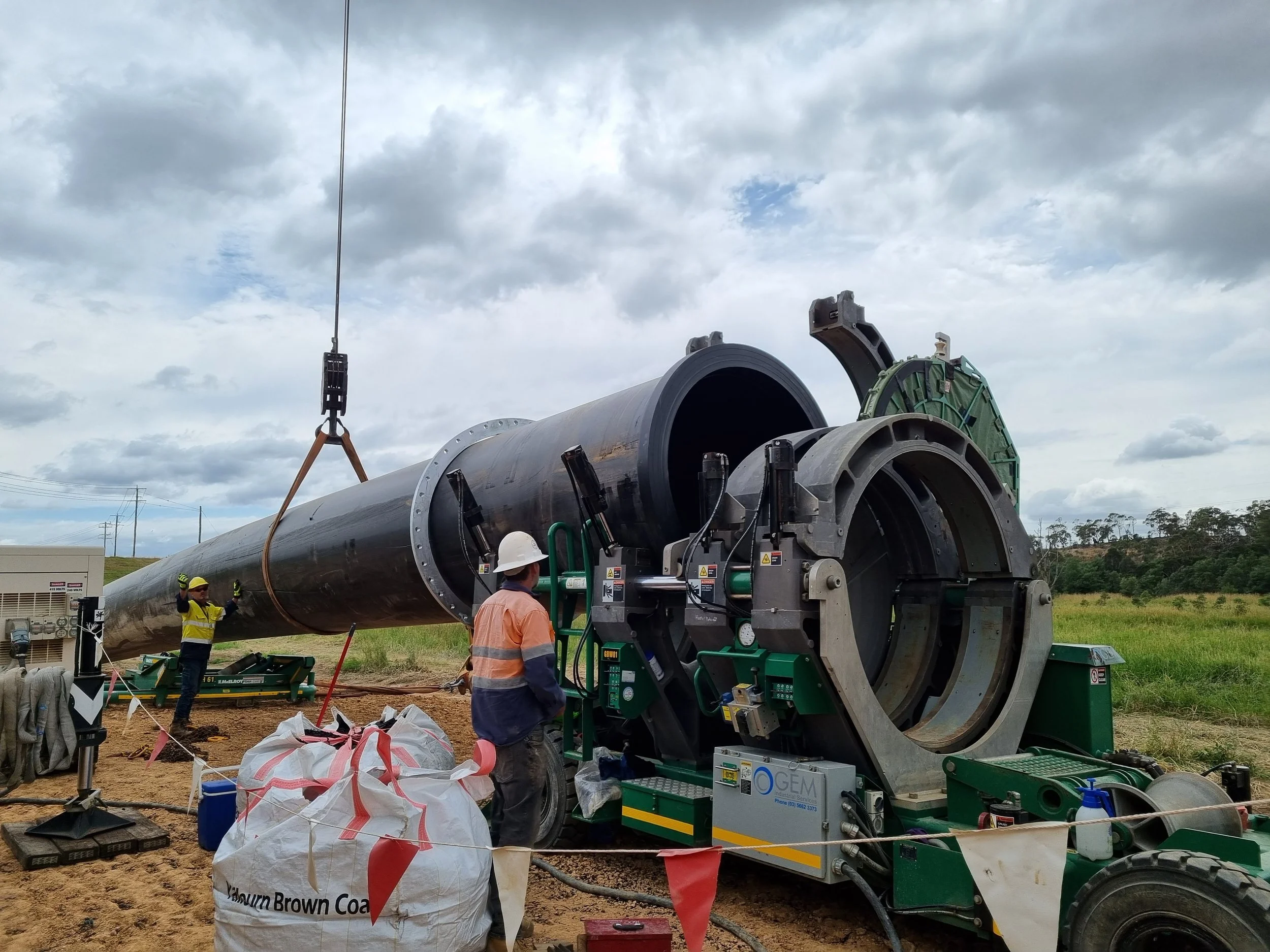
A butt fusion machine with clamps, heating plate, facer, and control system. GEM Industrial uses automated data logging systems for QA traceability.
-
Yes—HDPE fusion is commonly performed on-site, even in remote or challenging environments. Weather shelters and prep protocols are essential.
Quality & Safety
-
Through visual inspection, bead analysis, pressure testing, and digital weld logging. Standards like ISO 21307 and PIPA POP003 outline best practices.
-
Misalignment, contamination, incorrect temperature, and insufficient pressure. These can be avoided with proper training and equipment calibration.
-
Yes—with proper PPE, equipment maintenance, and adherence to procedures. GEM Industrial enforces strict safety protocols on all fusion sites.
Alternatives & Applications
-
Butt fusion joins pipe ends directly; electrofusion uses fittings with embedded heating coils. Electrofusion suits confined spaces or repairs.
-
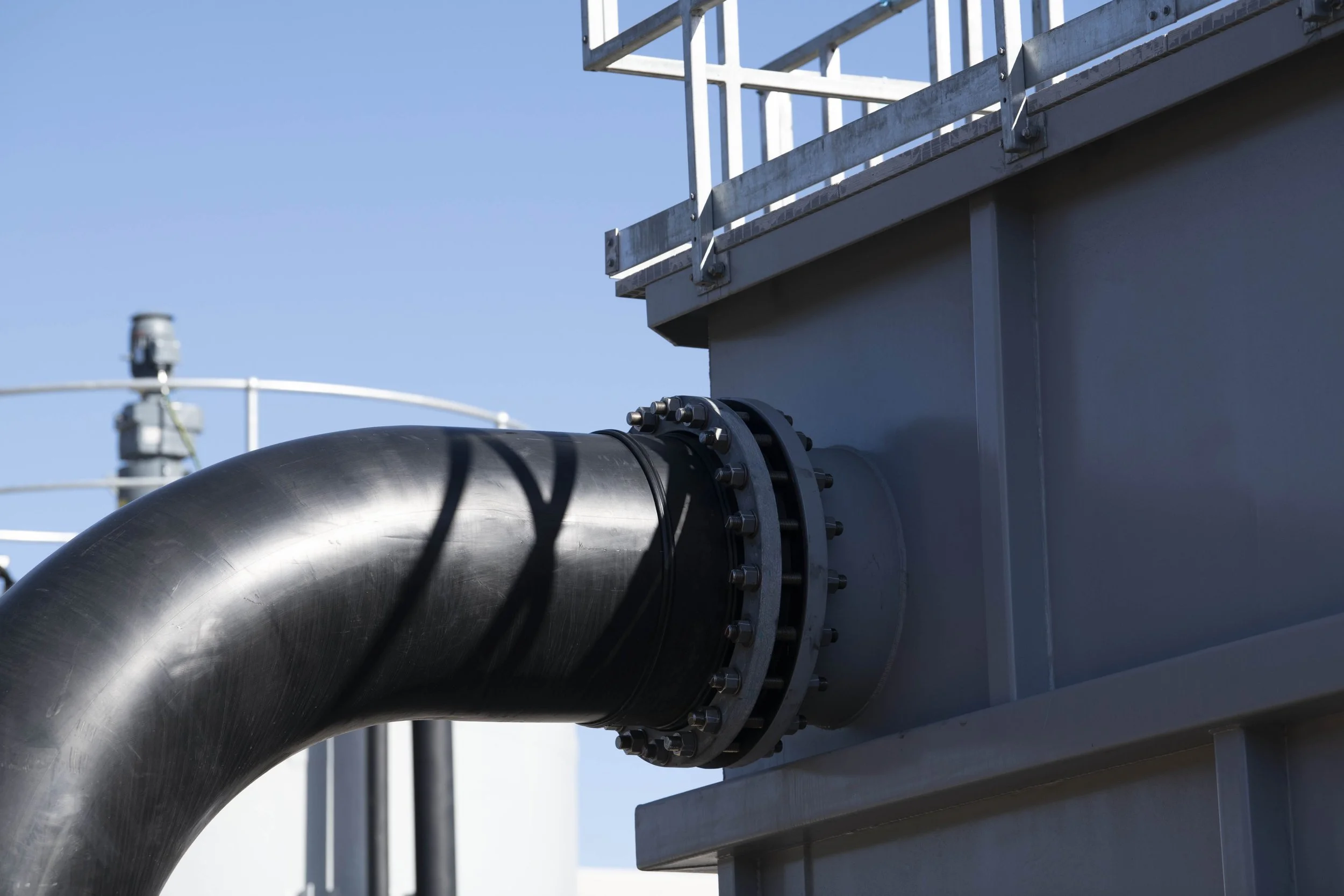
Not directly. Transitions require mechanical fittings or flanged adaptors.
-
Water mains, sewer systems, mining pipelines, gas distribution, and trenchless installations.
Technical & Performance
-
PN4 to PN25, depending on SDR and material grade (PE100 or PE112).
-
Typically -50°C to +60°C. HDPE softens above 80°C and should not be used for high-temperature fluids.
-
Yes—HDPE resists acids, alkalis, salts, and many hydrocarbons. Always consult compatibility charts for specific chemicals.
-
Yes—HDPE is widely used for low-pressure gas distribution, with specific grades and standards.
-
HDPE is lighter, corrosion-resistant, flexible, and easier to install. It’s ideal for long-term, low-maintenance systems.
Safety & Installation
-
Yes—HDPE is non-toxic and poses no health risks when handled properly.
-
Gloves, eye protection, long sleeves, and hearing protection. GEM Industrial enforces strict site safety protocols.
-
Yes—with proper bedding, compaction, and cover depth, HDPE performs well under roads and heavy loads.
-
Poor alignment, contamination during fusion, inadequate trench prep, and ignoring expansion/contraction allowances.
-
Hydrostatic pressure testing, visual weld inspection, and data logging verification.
Sustainability
-
Yes—HDPE has a low carbon footprint, is fully recyclable, and supports leak-free water conservation.
-
Absolutely. Offcuts and end-of-life pipes can be reprocessed into new products.
-
No—HDPE is inert and safe for potable water and sensitive environments.
-
Long lifespan, low maintenance, minimal leakage, and reduced installation impact make HDPE ideal for eco-conscious projects.